Imagine being at the absolute peak of your career, with a Grammy-nominated album and universal critical acclaim, and then releasing something so radical it makes even your biggest fans walk out.
From the Ascension (John Coltrane album) Wikipedia page. The hosts are synthetic voices.
Read the script
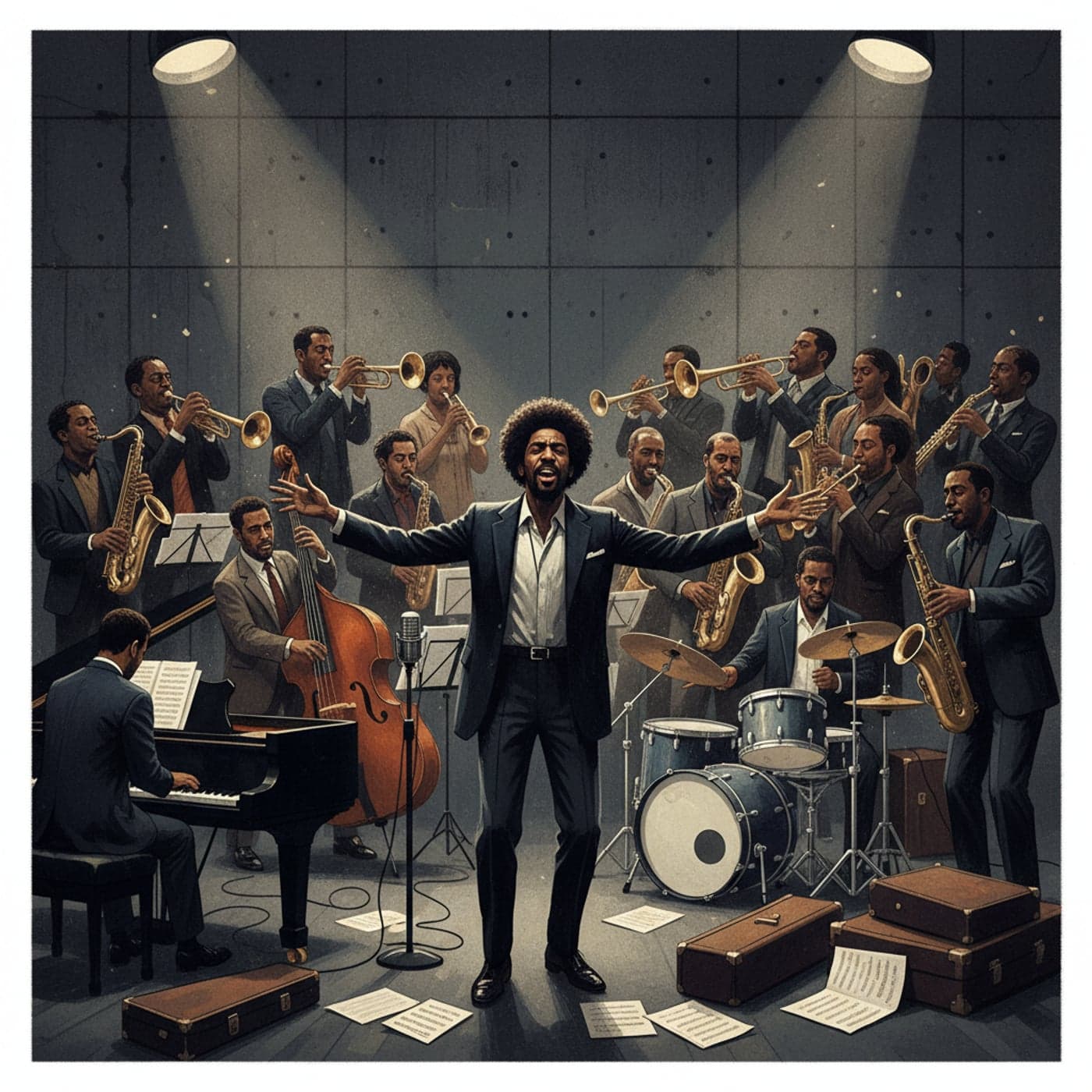
Imagine being at the absolute peak of your career. You've got a Grammy nomination, universal critical acclaim, and a platinum-selling album. Then, you release something so radical, so challenging, that even your biggest fans start walking out of your concerts. That's the story of John Coltrane and his album, Ascension. In June of 1965, John Coltrane was arguably the biggest name in jazz. His album, *A Love Supreme*, had been a monumental success, both commercially and critically. It was nominated for a Grammy, voted album of the year by major jazz publications, and Coltrane himself was inducted into the DownBeat Hall of Fame. He was at the zenith of his powers, a true star. But Coltrane was restless. The music that had brought him such fame was starting to feel confining. He was increasingly drawn to the avant-garde, to the wild, untamed sounds of free jazz. He had befriended saxophonist Albert Ayler, whose music was a significant influence, and he was becoming a mentor figure to a new generation of experimental musicians. Coltrane saw an opportunity. He was in an ideal position, as writer Bernard Gendron put it, to "bring into the orbit of the avant-garde fans and musicians who had previously hesitated, been puzzled or mildly hostile." So, he gathered a large ensemble. This wasn't his usual quartet. He brought in established players like trumpeter Freddie Hubbard and bassist Art Davis, but also younger, emerging avant-garde talents like saxophonists Pharoah Sanders and Archie Shepp, and alto saxophonist Marion Brown. The goal was not to showcase individual virtuosos, but to create a dense, collective sound. The recording session for *Ascension* was unlike anything before. It took place at the Van Gelder Studio, and it was largely unrehearsed. Coltrane provided only skeletal instructions. He handed out lead sheets, but as Archie Shepp recalled, the chords were optional. The emphasis was on collective improvisation, on dialogues between the soloists and the rhythm section, on crescendos and decrescendos. Marion Brown described it as "wildly exciting," the kind of record you could use to "heat up the apartment on those cold winter days." What resulted was a forty-minute sonic exploration. Coltrane himself described it as a "big band thing," but it resembled no big band recording that had come before. It was a maelstrom of sound, a dense tapestry woven by seven wind instruments and a powerful rhythm section. Unlike Ornette Coleman's earlier *Free Jazz* album, which also featured collective improvisation, *Ascension* prioritized dense sound complexes over interwoven melodic lines. As Ekkehard Jost noted, the central idea was not to produce a network of independent lines, but "dense sound complexes." The relationships between the individual instruments often fused into a "field of sound enlivened by irregular accentuations." Coltrane himself didn't take more solo time than anyone else. He wanted to avoid creating stars. The emphasis was on textures, on a unity of sounds, rather than a traditional song structure. This was a radical departure from the hierarchical structure of most jazz ensembles, where the leader is at the center. *Ascension* suggested the idea of the jazz band as a community, a collective effort. But this was not music for the faint of heart, or for those who had followed Coltrane for his more melodic work. The reaction was swift and intense. While some, like Bill Mathieu in DownBeat, called it "possibly the most powerful human sound ever recorded," others were bewildered. Saxophonist Frank Foster noted that *Ascension* was the turning point for many Coltrane enthusiasts, after which they "turned off." Audiences began walking out of his concerts. Violinist Leroy Jenkins recalled hearing Coltrane's group around that time, playing "this music, screaming and ranting and raving," and thinking, "Lord - I was so drug. I said 'What?'" Coltrane, despite the potential alienation of his audience and even some of his bandmates – Elvin Jones famously flung his snare at the studio wall after the second take – remained committed. He had found something profound in this new direction. He later called Albert Ayler and explained, "I recorded an album and found that I was playing just like you." Ayler's reply, "No, man, don't you see, you were playing like yourself. You were just feeling what I feel and were just crying out for spiritual unity," seems to capture the essence of Coltrane's search. *Ascension* was a watershed moment. It solidified Coltrane's place in the avant-garde and became a foundational work in free jazz. While it might have shocked some listeners at the time, subsequent generations have come to recognize its importance. Reviews today often acknowledge its initial difficulty but highlight the rewards of repeated listening, seeing the elements of anger and discord as expressions of spirituality and unification. It challenged listeners, yes, but it also emancipated them. This is based on the Wikipedia article titled Ascension (John Coltrane album), available under Creative Commons. The hosts are synthetic voices.