For centuries, the sound of a bell has marked three moments of the day, a call to pause and reflect on a divine message.
From the Angelus Wikipedia page. The hosts are synthetic voices.
Read the script
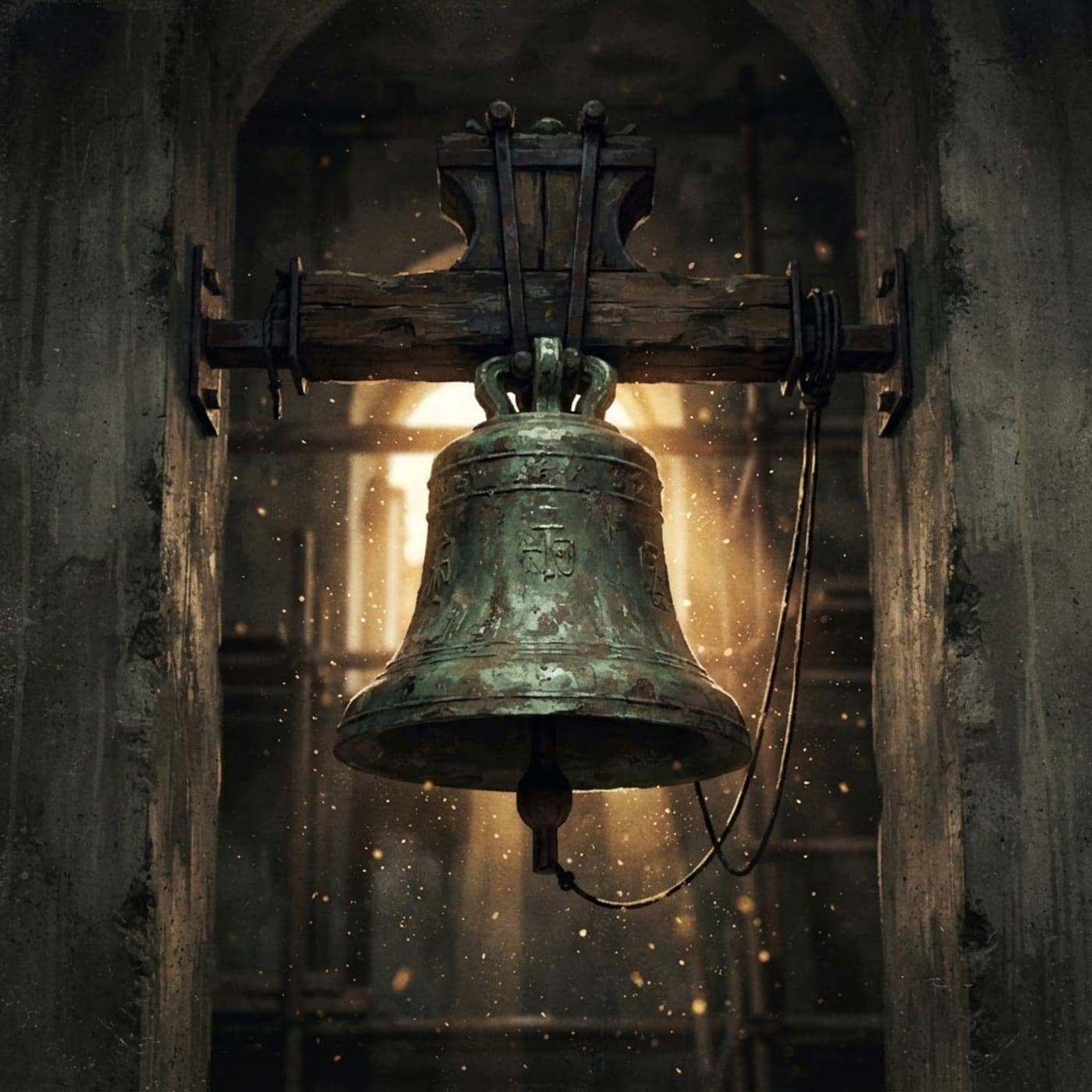
For centuries, the sound of a bell has marked three moments of the day, a call to pause and reflect on a divine message. It’s a sound that has woven itself into the fabric of daily life, a gentle insistence to look beyond the immediate and consider something deeper. This isn’t the life of a person, but rather the life of a devotion: the Angelus. Named for the Latin word for ‘angel,’ it’s a Catholic prayer, often accompanied by the distinctive ringing of a church bell, that calls the faithful to a moment of peace and reflection on the Incarnation of Christ. While primarily Catholic, its resonance extends to some Western Rite Orthodox, Lutheran, and Anglican churches, a testament to its enduring power. The Angelus devotion traces its roots back to the 11th century, emerging from monastic customs. Monks would recite three Hail Marys at the evening bell, a practice that slowly evolved and expanded. By the 13th century, Italian Franciscan friaries were documenting its use, and figures like St. Bonaventure encouraged wider adoption. The prayer’s form, as we know it today, crystallized by the 17th century, a culmination of centuries of spiritual practice. At its heart, the Angelus commemorates the Annunciation – that pivotal moment when the Angel Gabriel appeared to Mary, announcing that she would conceive Jesus. It’s a prayer that asks the faithful to meditate on the mystery of God becoming human, a profound theological concept made accessible through simple, repeated verses and responses. Historically, the Angelus wasn’t just a private devotion. It took on broader significance, linked to calls for peace and protection. Pope Calixtus III, in the mid-15th century, ordered a long midday bell-ringing and prayer for protection against Turkish invasions. Centuries later, Pope Pius XII would echo this, calling for prayer during the midday Angelus for the persecuted Church in Eastern Europe and China. These moments highlight how deeply the devotion was entwined with the hopes and anxieties of its time. Louis XI of France is credited with ordering the triple daily recitation in 1472, solidifying the morning, noon, and evening rhythm that continues today. The Angelus bell, too, developed its own specific pattern: three strokes repeated three times, with pauses in between, sometimes followed by a longer peal. This distinctive sound, whether from a centuries-old church bell or a modern broadcast, is instantly recognizable. Indeed, the Angelus continues to echo in our modern world. In countries like Ireland, the Philippines, and parts of Germany and Mexico, the Angelus is broadcast daily on radio and television. In Ireland, RTÉ One’s evening Angelus, a minute-long reflective slot, is both a deeply ingrained cultural touchstone and, for some, a point of discussion. Yet, as RTÉ research found, a clear majority of viewers still favor keeping it, with one audience member beautifully summarizing its appeal: “To the person of faith, it’s a moment of grace; to the person without faith, it’s a moment of peace. What’s not to like?” It’s a moment of collective pause, a brief respite from the relentless pace of modern life. Even papal addresses incorporate the Angelus. Every Sunday at noon, when in Vatican City, the Pope delivers a short speech, then leads the recitation of the Angelus, concluding with a blessing. This custom, instituted by Pope John XXIII in 1959, underscores the prayer’s enduring importance within the Church. The Angelus has also inspired countless artistic expressions. Poets like Sir John Betjeman, Francis Bret Harte, and Adam Mickiewicz have woven its bells and themes into their verses. Francis Jammes’ most famous collection of poems is even titled “From morning Angelus to evening Angelus.” Painters, most notably Jean-François Millet with his iconic “The Angelus,” have captured its quiet devotion. Musicians, too, have been moved by its spiritual depth, with composers like Franz Biebl setting its words to music. From its monastic origins to its broadcast on global airwaves, the Angelus has demonstrated a remarkable ability to adapt and endure. It remains a call to remember, to reflect, and to find a moment of grace or peace in the rhythm of the day. This portrait is based on the Wikipedia article titled ‘Angelus,’ available under Creative Commons. The hosts are synthetic voices.