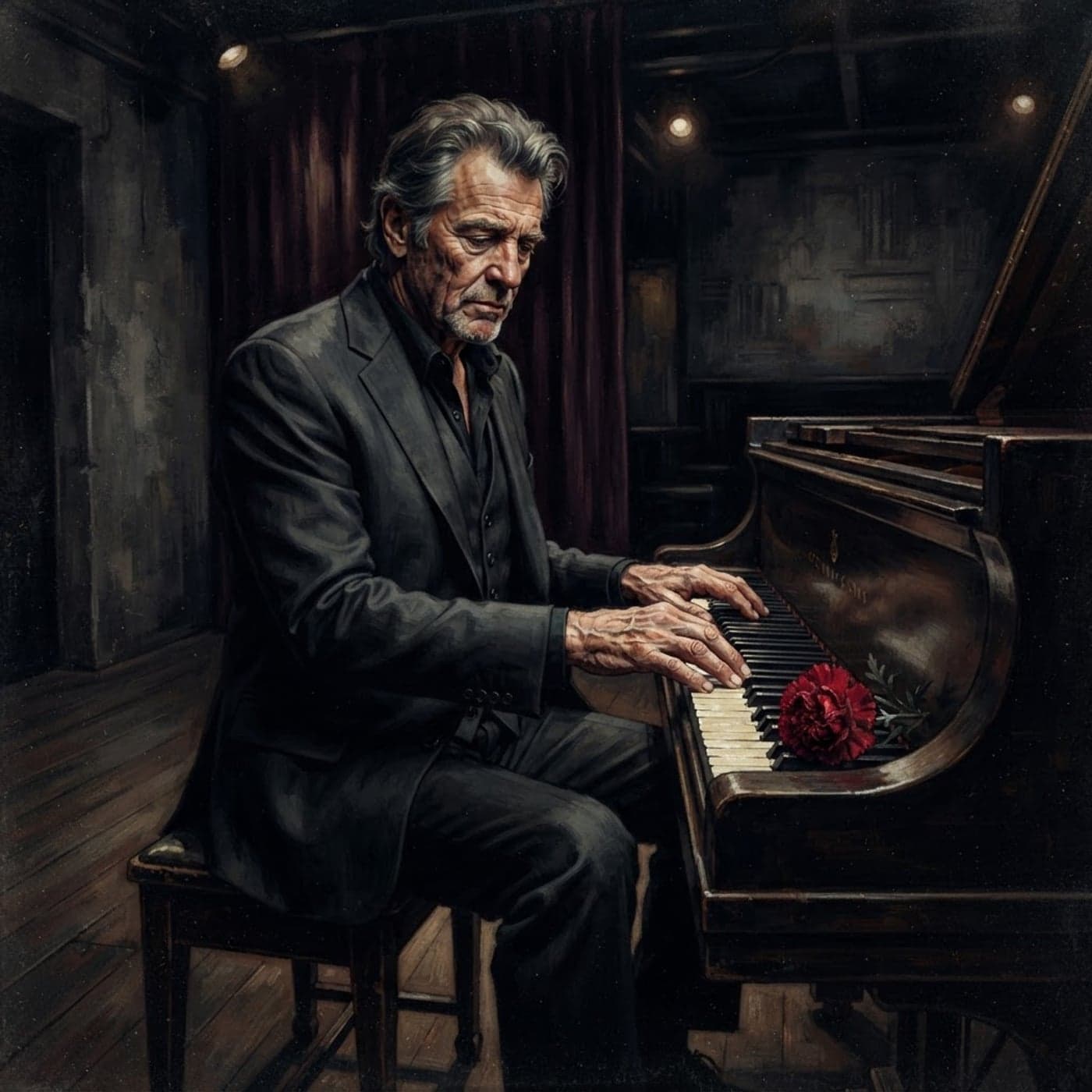
He was a communist tango maestro who spent time in jail, survived a ship meant to be sunk with him aboard, and was later apologized to by a president.
From the Osvaldo Pugliese Wikipedia page. The hosts are synthetic voices.
Read the script
Osvaldo Pugliese was born in Buenos Aires in 1905, a city already breathing with the rhythm of tango. But he wasn’t content to simply play the music of his time. He was a visionary, transforming the soundscape of tango with arrangements that were both dramatic and deeply respectful of its salon traditions. His music, with its strong, walking beat and intimate, impressionistic feel, became the soundtrack for late-night dancers, a staple in milongas where the night truly came alive. Yet, Pugliese’s life was about more than just music. He was a fervent communist, a conviction that shaped his journey as profoundly as his artistry. This unwavering political commitment led to repeated imprisonments and constant government censorship. In 1939, as he prepared to debut his orchestra at the new headquarters of the Communist Party, he was arrested. The exact charges were unclear, but the message was not: the authorities wanted to punish a prominent leftist figure. Despite the circumstances, he was treated with a strange deference, even offered mate and his favorite pastries in the officer’s office, a testament to his growing stature. His orchestra, a cooperative where members were paid for their contribution, not just their position, became a symbol of his principles. When Pugliese was jailed, the orchestra would play on, placing a single red carnation on the piano keyboard, a silent protest and a powerful symbol of their absent leader. This tradition became iconic. One of the most harrowing episodes of his life occurred in 1956. During the Revolución Libertadora dictatorship, he was imprisoned in what was chillingly called “Operation Cardenal,” alongside other members of the Communist Party. They were held on a ship, the “París,” with rumors swirling that it was to be sunk, with them inside. The public outcry, however, was immense. The image of his orchestra playing without him, the red carnation on the piano, galvanized people. The plan was abandoned, and Pugliese, along with the others, was eventually released. Through it all, he continued to compose. In 1961, he penned “Milonga Para Fidel,” a direct and defiant show of support for the Cuban Revolution. The governments of the time tried to silence him, restricting his recordings to just ten a year, and banning his music from radio and public places. But Pugliese was not to be silenced. His integrity and humility were unshakeable. His career culminated in a triumphant concert at the Teatro Colón in 1985, at the age of 80. It was a moment his mother had dreamed of for him, whispering “¡Al Colón!” as he practiced as a boy. Five standing ovations filled the grand theater. With characteristic humility, Pugliese dedicated the night not to himself, but to “the people, of the masses, lovers of our genre, our beloved genre, tango.” Perhaps one of the most remarkable moments came in 1973, shortly before Perón’s death. The president, who had once been responsible for some of Pugliese’s hardships, invited him to an artistic show. The next day, at a lunch, Perón approached the maestro, extending his hand and offering an apology for “those little matters that we had pending.” Pugliese, ever the man of grace, simply replied, “Don’t worry. Everything is already forgotten.” Perón, in turn, acknowledged, “Only greats like you know how to forgive.” Osvaldo Pugliese died in 1995, leaving behind a legacy that transcended music. He became known affectionately as “Saint Pugliese,” a revered figure invoked for good luck by other musicians, a symbol of artistic integrity and unwavering social commitment. His life was a testament to the power of conviction, where the beauty of his tango was inseparable from the depth of his beliefs. This portrait is based on the Wikipedia article titled “Osvaldo Pugliese,” available under Creative Commons. The hosts are synthetic voices.