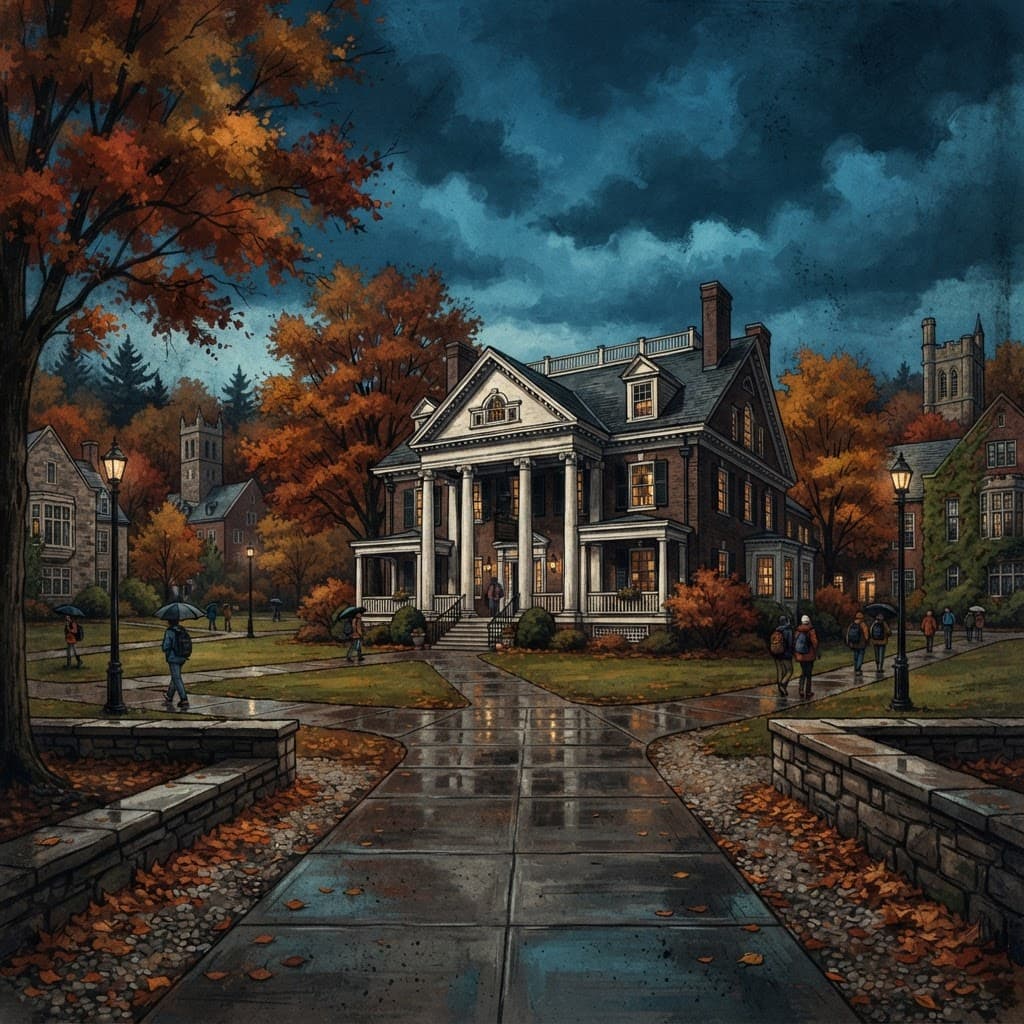
More than just a hotel, this Penn State landmark has weathered sinkholes, pandemics, and a century of change, emerging as a resilient hub for alumni and visitors alike.
From the Nittany Lion Inn Wikipedia page. The hosts are synthetic voices.
Read the script
The Nittany Lion Inn. It’s more than just a hotel, it’s a landmark. A place that's seen sinkholes open up and pandemics shut its doors, yet it stands, a resilient hub for Penn State, for alumni, for visitors. It’s a building that’s lived a life, a century of change etched into its very foundations. It began in 1931, a vision of colonial charm near the Pennsylvania State University campus. Part of a chain of college hotels, the Treadway Inns, it was designed to be a gathering place. Seventy-five rooms, space for 300 diners, all dressed in colonial style. Imagine the opening night in May 1931 – trustees, faculty, a dinner, a dance. And a room for just three dollars and fifty cents a night. It didn’t stay static. By 1953, an east wing was added, bringing more rooms, more dining space. The college grew, and so did the Inn. Then, in 1957, a dramatic moment – a fifteen-foot sinkhole opened up on the grounds. A reminder that even solid ground can shift. But the Inn, like the university it served, persevered. The biggest transformation came in 1990. A massive expansion, adding over a hundred rooms, a ballroom for five hundred, meeting rooms, a gym, a gift shop, an atrium. The entrance even moved, facing Park Avenue. Inside, new furniture, inspired by 18th-century masters, brought a renewed sense of elegance. It was a fifteen-million-dollar rebirth, though not without its own small dramas, like protests over contractors. Then came 2020, and the world changed. The Nittany Lion Inn, like so many places, found a new purpose. It became temporary student housing, even classrooms. A quarantine dormitory for infected students. It was a pause, a pivot, a testament to its adaptability in the face of unprecedented times. In 2022, a new chapter began. A ground lease was approved with the Scholar Hotel Group, a company already familiar with State College. Plans were made for a significant renovation, an estimated ten million dollars. Work started in June 2023, focusing on the exterior – repainting, new roofs, new windows. The restaurants, Whiskers and The Dining Room, were reimagined, becoming new spaces with a cocktail bar and a lobby café. And then, in September 2024, it reopened. Not just a facelift, but a comprehensive overhaul. The goal: a modern, yet classic aesthetic, a blend of tradition and contemporary comfort. Dark wood, blue and white accents, gleaming marble – a nod to Penn State’s own colors. It now boasts 230 guest rooms, each updated with modern amenities. The meeting spaces have been expanded, offering over twelve thousand square feet for events. And the dining has been completely rethought. There’s Lionne & 1855 Lounge, a fine dining experience with Executive Chef Mirko Loeffler at the helm, featuring dishes like a signature lobster bisque. There’s Triplett’s, a casual spot named after Wally Triplett, one of Penn State’s first Black football players, a true symbol of the university’s spirit. And for something lighter, Dear Joe: Café and Bakery offers breakfast, grab-and-go options, and specialty coffee. Even a familiar downtown name, Harpers, known for menswear, has opened a boutique inside. The Nittany Lion Inn has hosted presidents – Eisenhower, Johnson, the Bushes. It’s welcomed cultural giants like Robert Frost and Louis Armstrong. It’s been a backdrop for countless celebrations, game-day gatherings, weddings, and reunions. Through sinkholes and pandemics, through decades of change, the Nittany Lion Inn has remained a constant. A place of welcome, a place of connection, a place that truly embodies the spirit of Penn State. This portrait is based on the Wikipedia article titled Nittany Lion Inn, available under Creative Commons.