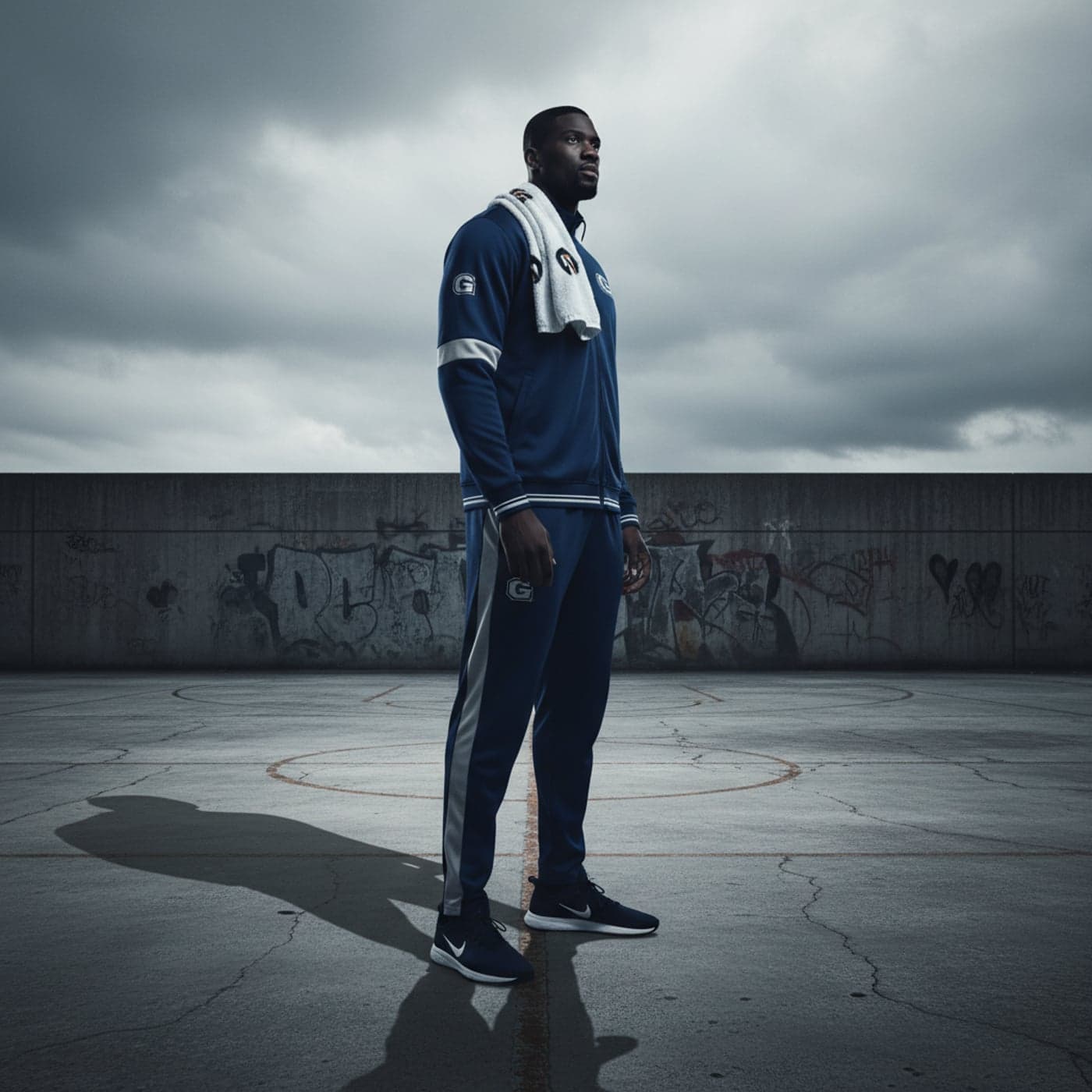
A towering figure on the sidelines, John Thompson Jr. once confronted a feared drug lord in his office, not with threats, but with a steely gaze and a simple, powerful demand.
From the John Thompson (basketball) Wikipedia page. The hosts are synthetic voices.
Read the script
John Thompson was a giant. Not just on the basketball court, where he stood six-foot-ten, but in the way he moved through the world. He had a presence that filled a room, a quiet authority that could stop you in your tracks. Before he became the coach who would break barriers, he was a player. He backed up Bill Russell, a legend, on those dominant Boston Celtics teams of the 1960s. Two championship rings he earned, the quiet understudy to a king. But his true impact was felt on the sidelines, at Georgetown University. For 27 seasons, he transformed a struggling program into a national powerhouse. He made the Georgetown Hoyas a destination. He led them to the 1984 NCAA championship, a monumental victory. It was the first time an African-American coach had ever won a major collegiate title. That moment echoed far beyond the arena. Thompson was more than a coach. He was a shield. He was a protector of his young men. The world outside the gym could be a dangerous place, especially for Black athletes navigating the pressures of fame and opportunity. There's a story, a powerful one, about Thompson confronting a notorious drug lord. Rayful Edmond III. A man whose name carried weight, whose shadow stretched long over Washington D.C. Thompson didn't threaten him. He didn't posture. He simply met him in his office. And with that steely gaze, that imposing frame, he made a demand. He told Edmond to stay away from his players. He wouldn't let anyone prey on the young men he was responsible for. It was a moment that showed the depth of his commitment, the fierceness of his guardianship. He was also a man of principle. He famously protested the NCAA's Proposition 42. This rule would have denied scholarships to student-athletes who didn't meet certain academic standards. Thompson saw it for what it was: a potential barrier, particularly for Black athletes, that could deny them an education. He walked away from a game, a powerful statement against injustice. He believed in opportunity, in the right to an education, and he fought for it. His image on the sideline became iconic. The tall figure, often with a white towel draped over his shoulder—a tribute to his mother. It was a symbol of resilience, of integrity. He coached future NBA stars like Patrick Ewing, Alonzo Mourning, Allen Iverson. He demanded excellence on the court, but he also insisted on excellence in the classroom. His players graduated. That was non-negotiable. John Thompson Jr. was a complex figure, a man of immense strength and deep compassion. He navigated the treacherous waters of college sports with a moral compass that never wavered. He left an indelible mark, not just on basketball, but on the lives he touched. This story is based on the Wikipedia article titled John Thompson (basketball), available under Creative Commons. The hosts are synthetic voices.