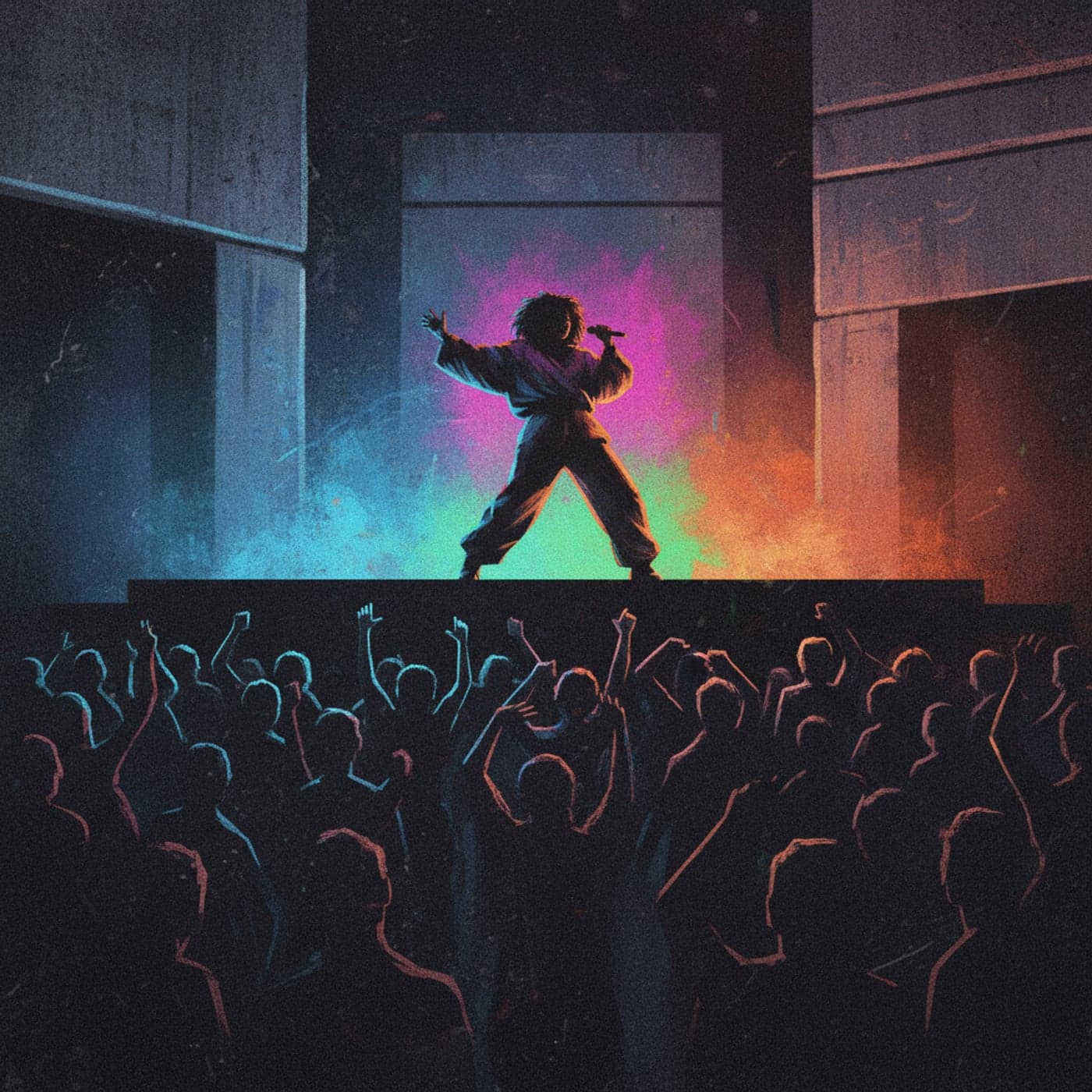
A song born in the soul of the American South, rediscovered and reborn in the acid house clubs of the UK, became a global anthem of resilience.
From the The Only Way Is Up Wikipedia page. The hosts are synthetic voices.
Read the script
Some songs are born in one place, live one life, and then, unexpectedly, find themselves reborn, reimagined, and rising to heights their first incarnation never dreamed of. This is the story of such a song, a tune that began in the soulful depths of American R&B and journeyed across an ocean to become an anthem for a generation on the dance floors of 1980s Britain. Our story begins with Otis Clay, a name synonymous with deep, heartfelt soul music. In 1980, Otis, known for his powerful voice and authentic delivery, released a single titled “The Only Way Is Up.” The song, penned by George Jackson and Johnny Henderson, was a classic piece of soul – rich, earnest, and undeniably optimistic. It was a good song, a solid track from a respected artist, but it didn't set the charts alight. It found its audience, certainly, and even lent its name to Clay's 1982 Japanese album, and later appeared on his 2012 release, a testament to its enduring quality within his own catalogue. But for a broader audience, it remained a hidden gem. Then, eight years later, the song was given a new lease on life, a radical transformation that would propel it from a soulful whisper to a global shout. The year was 1988, and the UK was in the throes of acid house, a cultural phenomenon known as the 'Second Summer of Love.' Into this vibrant, pulsating scene stepped Yazz, a British singer with a distinctive voice and an undeniable stage presence. She had already tasted success, collaborating with the pioneering dance duo Coldcut on their hit “Doctorin' the House.” Yazz, whose journey had taken her from working in a Soho nightclub to modeling, and then to singing lessons and demo recordings, had an instinct for what would connect. The idea of covering “The Only Way Is Up” was floated. Initially, Coldcut, the masterminds behind the production, were hesitant. They worried about 'spoiling the original.' But Yazz felt differently. She saw the song's potential, its inherent message of resilience and hope, as a perfect fit for the burgeoning house scene. Coldcut, comprising Jonathan More and Matt Black, eventually relented and took on the production role. This was a challenge for them, moving from their usual sampling-heavy approach to working with a live vocalist on a structured song. But the result was magic. They infused Otis Clay's soulful melody with an irresistible electro-soul house beat, creating something entirely new yet still deeply familiar. Released in July 1988 as Yazz's first solo single, credited to 'Yazz and the Plastic Population,' it was an instant, undeniable smash. The song’s infectious energy and uplifting lyrics resonated deeply. It spent an incredible five weeks at the top of the UK Singles Chart, becoming the second best-selling single of 1988. Its success wasn't confined to Britain; it soared to number one across Europe, in Belgium, Denmark, Ireland, Luxembourg, the Netherlands, and Sweden. It reached the top ten in numerous other countries, including France, Germany, and Switzerland, and even hit number one in New Zealand. In the United States, it climbed to number two on the Billboard dance chart, cementing its status as a cross-generational, cross-genre anthem. Music critics of the time were captivated. Billboard called it an “annoyingly catchy disco/pop smash.” Music & Media described it as an “electro-soul number with more than a touch of house influences. A good, radio-friendly, dance song.” Record Mirror declared it “a tale of love under stress, dedication and survival, all set to an infectious house beat,” adding that it was “where bad house music crashes into gay Seventies disco and ends up in the top 10.” Decades later, Classic Pop would rank it among the top cover versions of the 80s. “The Only Way Is Up” earned a gold record in Australia and the UK, selling hundreds of thousands of copies, and a silver record in France. Its music video, a vibrant snapshot of the era, has since garnered millions of views online, a testament to its enduring appeal. This song’s journey, from a soulful American ballad to a global dance floor phenomenon, is a powerful reminder that a compelling message, when given new wings, can transcend its origins and inspire millions. It’s a story of reinvention, of how music can adapt, evolve, and continue to uplift, proving that sometimes, the only way truly is up. This portrait is based on the Wikipedia article titled “The Only Way Is Up,” available under Creative Commons. The hosts are synthetic voices.