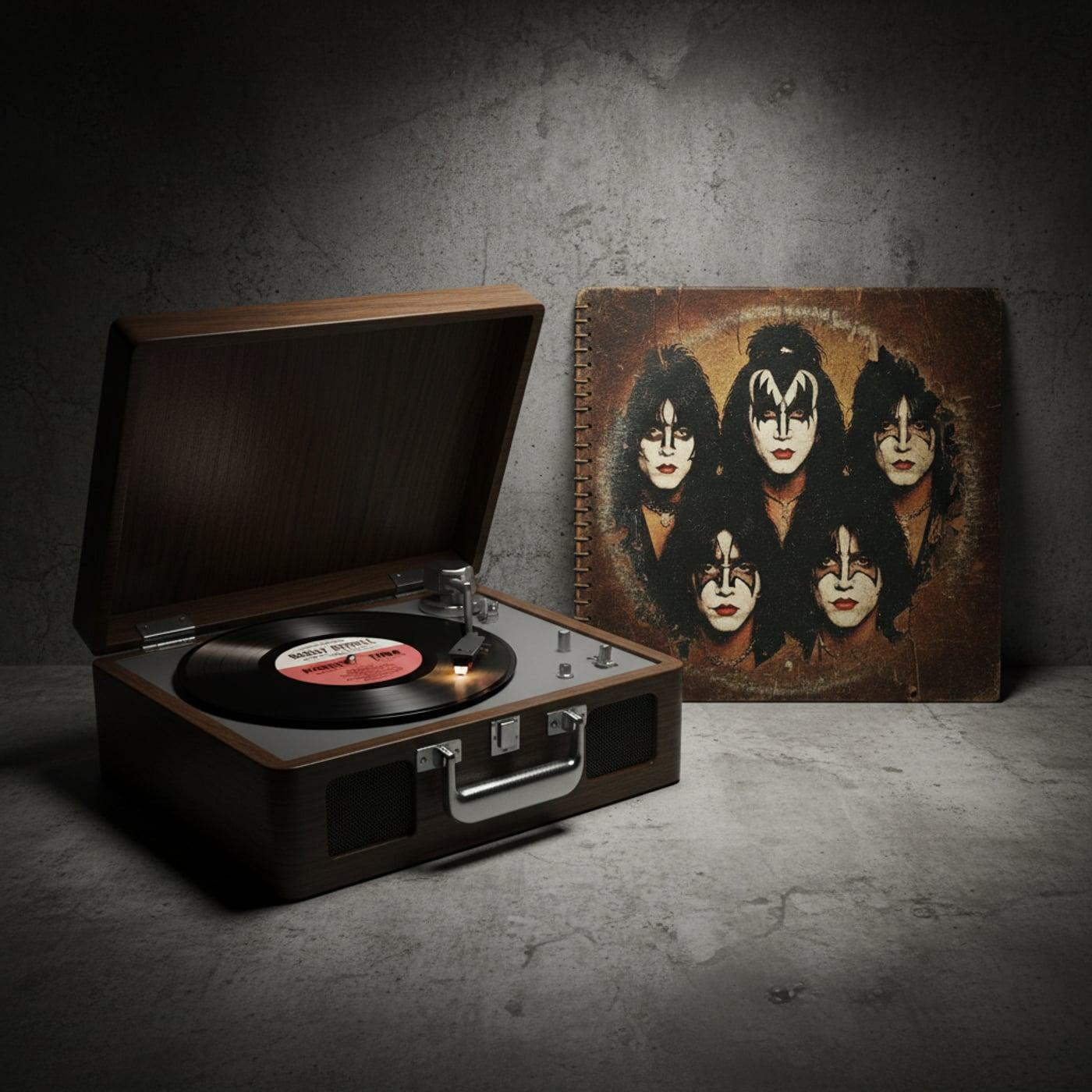
A 17-year-old Bobby Rydell's first single became a chart-topping hit, but years later, a legendary hard rock band's attempt to replicate its success fell flat.
From the Kissin' Time (song) Wikipedia page. The hosts are synthetic voices.
Read the script
We all know the story of the teen idol's first hit. A fresh face, a catchy tune, and suddenly, they're everywhere. It's a classic trajectory, isn't it? But what if that same catchy tune, years later, becomes a desperate gamble for an entirely different kind of band? A hard rock band, no less, trying to find its footing. Our story begins in 1959. Bernie Lowe and Kal Mann, two savvy music men, penned a song called "Kissin' Time." It was designed for their new artist, a fresh-faced 17-year-old named Bobby Rydell. This wasn't just any song; it was his debut single. And it worked. "Kissin' Time" rocketed up the charts, hitting number 11 on the Hot 100, and turning Rydell into an instant teen idol. He was so popular, they even recorded a special version for his Australian tour, name-checking Sydney, Perth, and Brisbane. It was pure, unadulterated, innocent pop success. Fast forward to 1974. The music landscape had shifted dramatically. Enter Kiss. The band had just released their eponymous debut album, and it was… well, it was struggling. It wasn't selling as expected, and the record company was getting nervous. Neil Bogart, the founder of Casablanca Records, was convinced that a hit single was the only thing that could save the album. And for some reason, he had an idea. He looked back to that innocent 1959 hit. He ordered Kiss to cover "Kissin' Time." Now, imagine this. Kiss. The leather-clad, face-painted, hard-rocking band. And they're being told to record a song about 'smoochin' all over, even in St. Lou.' It just didn't fit. The lyrics were completely wrong for their image. So, the producers, along with the band members, sat down and rewrote the entire thing. Kenny Kerner, one of the album's producers, described it vividly: "We sat there, we all had pads and pencils... 'Alright, well... they're kissin' in'... and somebody would go, 'Detroit'! And we'd go, 'Alright, they're kissin' in Detroit.'" They rewrote the song in about twenty minutes. The band, understandably, wasn't thrilled. They were pressured into it, a move born of desperation from the label. The re-imagined "Kissin' Time" was released as a single, three months after the initial album dropped. It featured Gene Simmons, Paul Stanley, and Peter Criss all on co-lead vocals. But despite the label's hopes, it failed to replicate Bobby Rydell's success. It limped to number 83 on the US Pop Charts and 79 on US Cashbox. While the album itself eventually climbed to a respectable number 87, the single was a clear underperformer. "Kissin' Time" became a curious footnote in Kiss's early career. They performed it for a short period while the single was being promoted, then promptly dropped it from their setlist for decades. It wasn't until their 2006 Rising Sun Tour that they dusted it off again, much to the surprise of their fans. And then, an acoustic version in 2015. It seems even Kiss couldn't entirely escape the ghost of that teen idol hit. The story of "Kissin' Time" isn't just about a catchy tune. It's about the ever-changing tides of music, the desperate gambles of record labels, and the sometimes-awkward intersections of different musical eras. It’s a vivid illustration of how a song can be a smash hit for one artist, a marketing tool for another, and a reluctant obligation for a third. This is based on the Wikipedia article titled "Kissin' Time (song)," available under Creative Commons. The hosts are synthetic voices.