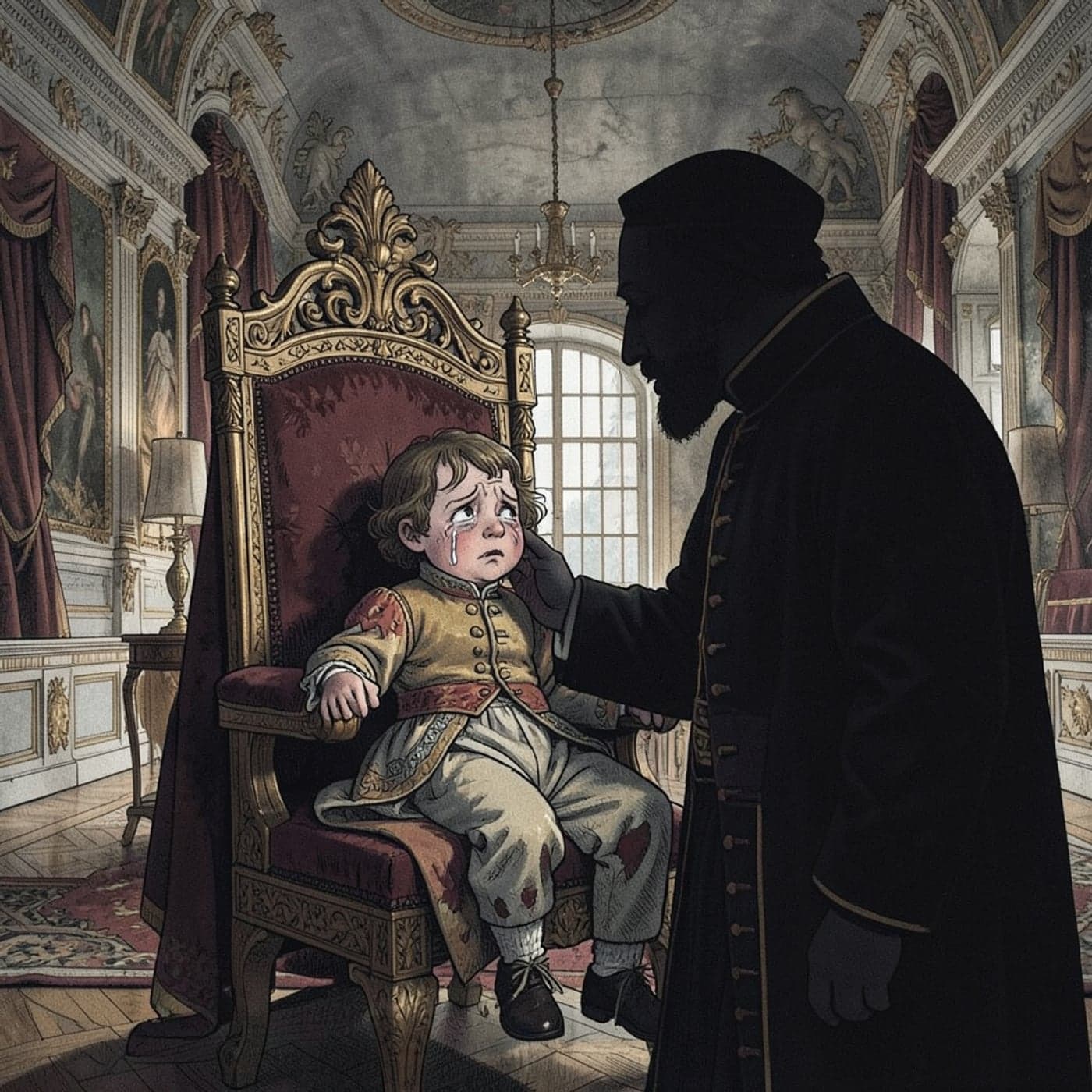
Wait, so his great-grandfather died of smallpox, his grandfather died of smallpox, his dad died of measles, his older brother died of measles and bloodletting, but *he* survived a measles scare because his governess hid him in a closet?
From the Louis XV Wikipedia page. The hosts are synthetic voices.
Read the script
Host A: Okay, so I just went down a rabbit hole with Louis XV. Host B: Oh, the Beloved. That's a good one. Host A: "The Beloved." We'll get to that. But first, can we talk about his childhood? Because this is wild. Host B: Oh my god, yes. It's like a horror movie. Host A: Right? So, his great-grandfather, Louis XIV, the Sun King, dies of smallpox. Host B: Check. Host A: Then his grandfather dies of smallpox. Host B: Yep. Host A: His dad dies of measles. His older brother dies of measles *and* bloodletting. Host B: [laughs] The classic one-two punch of 18th-century medicine. Host A: Exactly! But then *he* gets measles, the two-year-old, and his governess, Madame de Ventadour, hides him in a closet. Host B: I know! She just like, locks him away from the doctors. "No, you're not bleeding this one!" Host A: "You are not touching this child!" And he survives! Because she literally hid him from the people who were supposed to be saving him. Host B: It's incredible. So this tiny, terrified child, who's seen everyone around him die, suddenly he's the King of France at five years old. Host A: Five! And he's trembling and crying at the coronation. Can you imagine? Host B: I mean, who wouldn't be? He's the last man standing in his family line, practically. Host A: And then, because he's five, he can't actually rule. So, his great-uncle, Philippe II, the Duke of Orléans, becomes the Regent. Host B: Right. And Louis XIV didn't even want that guy to be Regent. Host A: No, he did not. He called him a "braggart of crimes" and tried to set up this council to limit his power, but Philippe just got the Parlement of Paris to annul the will. Host B: Which is kind of a foreshadowing, right? Because that whole right of remonstrance that Philippe gave back to the Parlement, that comes back to bite the monarchy later. Host A: Totally. It's like, he makes this deal to get power, and in doing so, he weakens the very institution he's supposed to be protecting. Host B: And then, once Philippe dies, it's Cardinal Fleury who essentially takes over. Host A: For almost two decades! Fleury just runs the show. And he's kind of a genius, honestly. He stabilizes the economy, expands trade, builds roads. Host B: He did. He balanced the budget at one point, which is wild for that era. Host A: But he also completely suppresses dissent. He makes the Unigenitus bull, this papal decree against Jansenism, the law of the land, and forbids the Parlement from discussing it. Host B: So, on the surface, France is doing well, but underneath, all this resentment is building up, especially among the nobility. Host A: Exactly. And Louis XV himself, during this time, he's just being managed. Fleury encourages his indecisiveness, flatters his pride, keeps him from discussing politics with the Queen. Host B: It's like he's being kept in a gilded cage. He's the King, but he's not really *the* King. Host A: He's also super shy. Do you remember the bit about him having to dance in ballets? Host B: Oh, yes! [laughs] The two-year-old who survived measles and bloodletting, but was terrified of dancing in public. Host A: He danced in two ballets, and never again. The article says he was "terrified of these performances." Host B: Poor guy. I mean, he seems like he had some genuine intellectual curiosity, though. He loved science and geography. Host A: He did! He charmed the Tsar by identifying Russian cities and rivers, and he created departments in physics and mechanics later on. He even sponsored the first complete map of France. Host B: See? He had potential! But it just seems like he was always overshadowed or controlled. Host A: And then Fleury dies, and Louis is finally, truly, in charge. Host B: And that's when things really start to go downhill, right? Host A: Pretty much. His indecisiveness, his extravagance, the wars... He loses New France to Britain. Host B: The Seven Years' War. A disaster. Host A: And historians are pretty brutal about his reign. They say he weakened the monarchy, depleted the treasury, and set the stage for the French Revolution. Host B: So "the Beloved" was maybe a bit ironic in hindsight. Host A: Well, the article does say a minority of scholars argue he was popular during his lifetime, but his reputation was blackened by revolutionary propaganda. Host B: Interesting. So maybe he was beloved for a while, and then things just… fell apart. Host A: Yeah, it sounds like he inherited a kingdom in a precarious position, and then his own weaknesses, combined with the underlying tensions, just made it worse. Host B: And ultimately, left his grandson, Louis XVI, with an impossible situation. Host A: Pretty much. It's a fascinating story of a king who was king for almost 59 years, but never quite seemed to be in control. Host B: From a closet to a throne, and then to the brink of revolution. Host A: All that, and he was known for being indecisive and extravagant. What a legacy. Host B: What a ride. This is all based on the Wikipedia article titled Louis XV, available under Creative Commons.