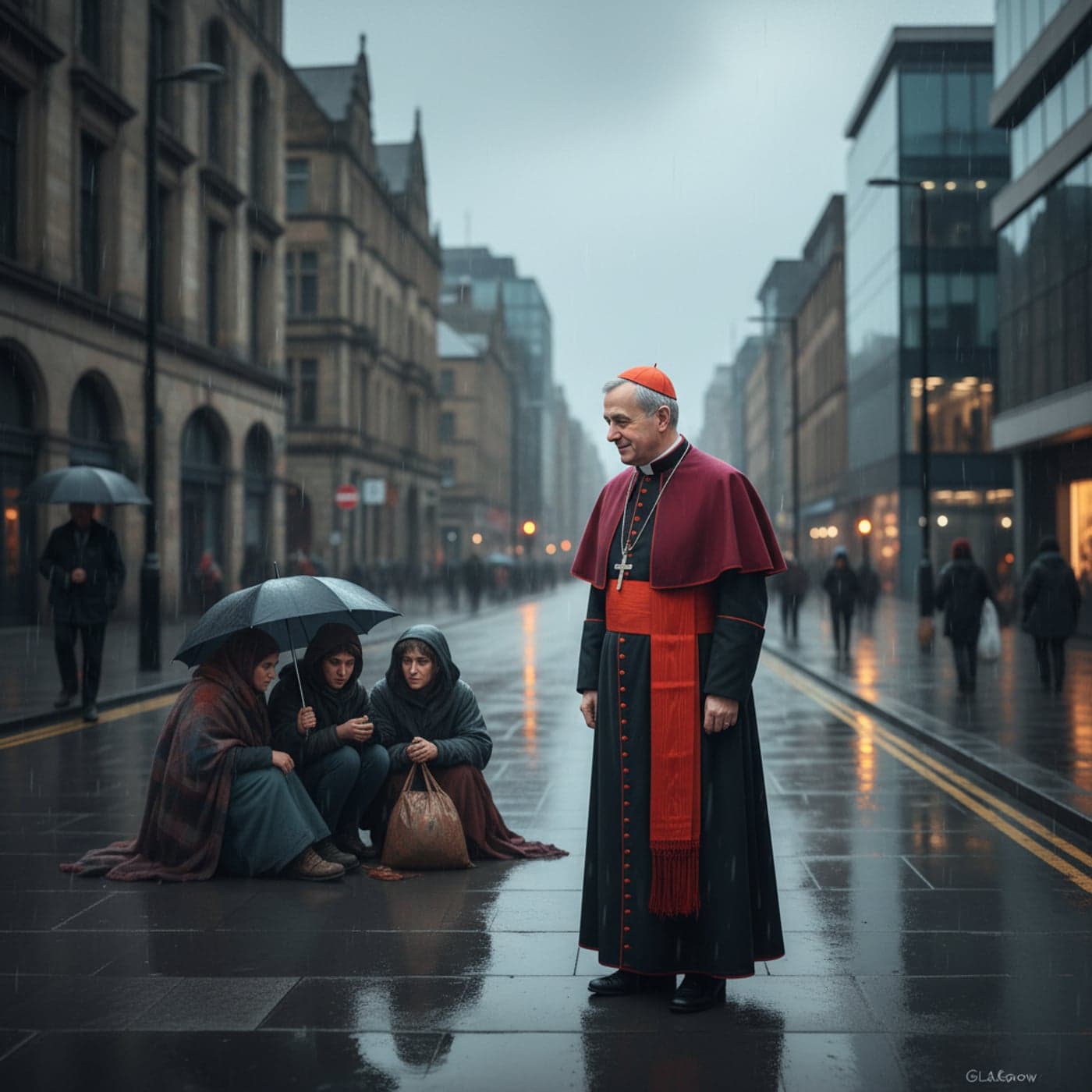
He was the second Scot since the Reformation to become a cardinal, but his heart was in the streets, not the Vatican.
From the Thomas Winning Wikipedia page. The hosts are synthetic voices.
Read the script
He was the second Scot since the Reformation to become a cardinal, but his heart, it seemed, was always in the streets, not the Vatican. Thomas Winning’s life was a testament to unwavering faith and a deep-seated commitment to the marginalized, navigating the complexities of the Church from the coal mines of his youth to the hallowed halls of Rome, always returning his focus to the needs of the poor and the vulnerable. Born into a devout Roman Catholic family in Wishaw, Lanarkshire, in 1925, young Tom Winning’s path to the cardinalate began with a childhood aspiration to the priesthood. His father, a former coal miner and First World War veteran, had to become an entrepreneur, selling homemade boiled sweets door-to-door to support the family. This upbringing, marked by both faith and hardship, shaped Winning’s perspective from an early age. He served as an altar boy and chorister, and while attending Our Lady’s High School in Motherwell, he declared his desire to become a priest. At just 17, Winning entered St. Peter’s Seminary. His training took him from Scottish seminaries to London, and then, after the war ended, to Rome. He was part of the first group of students to return to the Scots College, which had been empty since 1939. In the historic Church of St. John Lateran, in December 1948, Thomas Winning was ordained for the Diocese of Motherwell. His early appointments included parish work, but a year after his ordination, he returned to Rome to pursue advanced studies in Canon Law, earning his doctorate in 1953. He served in various capacities, including as priest-secretary to Bishop James Donald Scanlan of Motherwell. Then, in a pivotal moment, he became Spiritual Director at the Pontifical Scots College in Rome just as the Second Vatican Council was convened. This placed him in a unique position to witness and participate in those historic years, engaging with bishops as the Church embarked on profound changes. Returning to Scotland in 1966, he took on his first charge as a parish priest in Saint Luke’s, Motherwell. His leadership qualities were soon recognized, and in 1970, he was appointed as the first Officialis of the newly formed Scottish National Tribunal, a role that required a deep understanding of Church law and administration. His ascent continued swiftly. In 1971, Winning was nominated as Auxiliary Bishop of Glasgow. Just three years later, in 1974, he succeeded Archbishop Scanlan as the Metropolitan Archbishop of Glasgow. This was a significant moment, and in 1975, he became the first Roman Catholic Archbishop to address the General Assembly of the Church of Scotland, a powerful symbol of inter-church dialogue. As Archbishop, Winning became a prominent, and often outspoken, voice on moral and ecclesiastical matters. He was unafraid to publicly articulate the Roman Church’s understanding of issues like abortion and homosexuality. He supported a campaign against the repeal of Section 28 and challenged the Act of Settlement. His commitment to the vulnerable was evident in his initiative to provide financial support to young mothers, offering an alternative to abortion. He also famously rejected a plan to renovate and extend St. Andrew’s Cathedral, believing the money would be better spent on the poor of the Archdiocese. Winning played a major role in bringing Pope John Paul II to the UK in 1982, a visit that was nearly canceled due to the Falklands Conflict. It’s believed that Winning convinced the Pope to proceed, making it the first official visit by any Pope to the United Kingdom. In November 1994, his dedication and leadership were recognized by Pope John Paul II when he was elevated to the College of Cardinals. He became Cardinal-Priest of Sant'Andrea delle Fratte, and in doing so, only the second cardinal since the Reformation to be based in Scotland. He received numerous honorary degrees and was appointed to significant pontifical councils. Thomas Winning died in office in June 2001, following a heart attack. He is interred in the crypt of St. Andrew’s Cathedral in Glasgow. His legacy, however, lives on, particularly in the Cardinal Winning Secondary School in Glasgow, named in his honor. It’s a fitting tribute to a man whose heart was always with the people, especially the most vulnerable. This portrait is based on the Wikipedia article titled Thomas Winning, available under Creative Commons. The hosts are synthetic voices.