He was a musical prodigy who befriended Elvis Presley at 16, but his true destiny was forged in a partnership that defined a sound and a generation.
From the Don Rich Wikipedia page. The hosts are synthetic voices.
Read the script
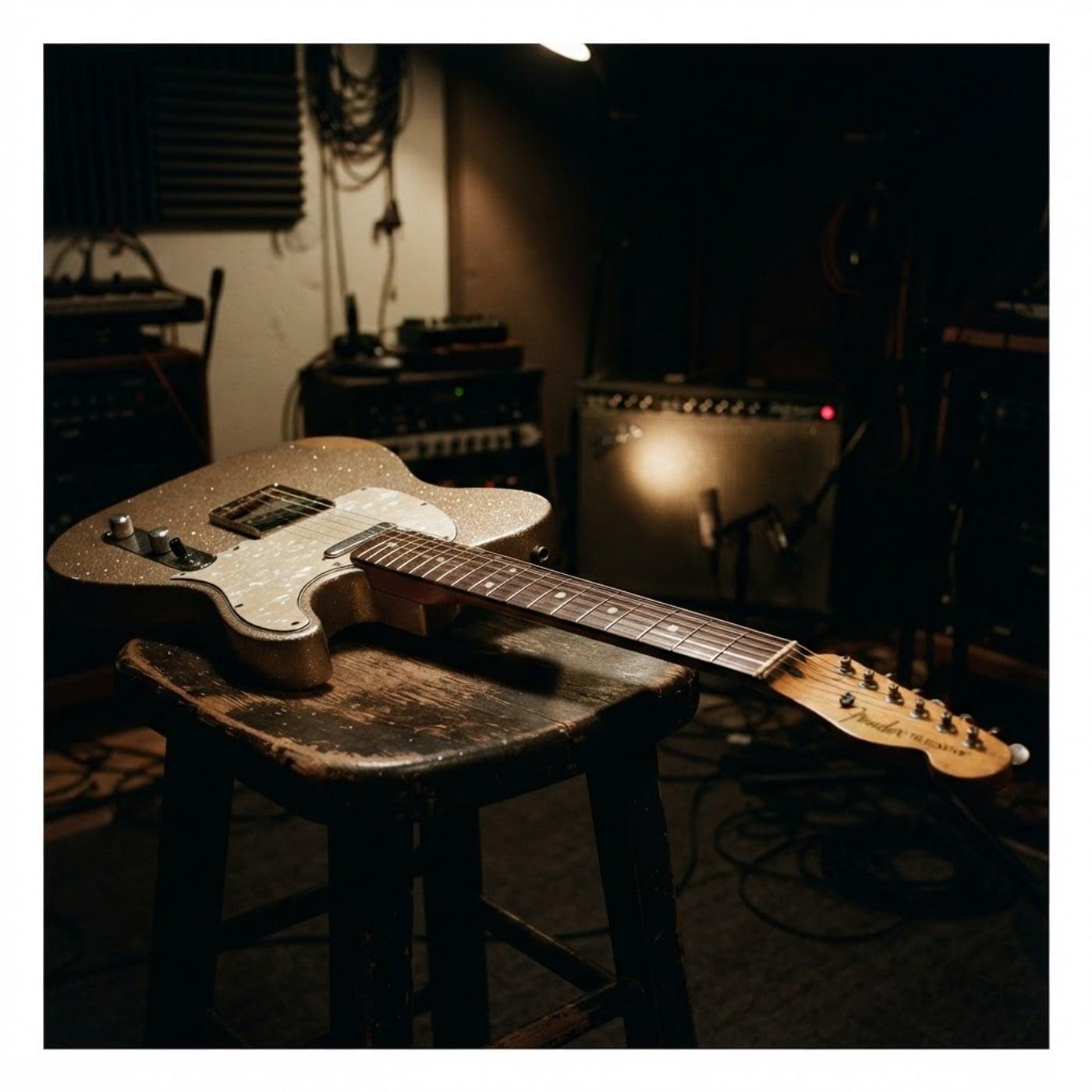
He was a prodigy, a musical whiz kid who opened for Elvis Presley at 16. But his true destiny, the sound that would define a generation, was forged in a partnership so profound that when it ended, his best friend felt his own musical life had ended too. This is the story of Don Rich. Donald Eugene Ulrich was born in Olympia, Washington, in 1941. Adopted by Bill and Anne Ulrich, he grew up in Tumwater, a stone's throw from his father’s barbershop. His parents, recognizing a spark, put a fiddle in his hands when he was just three. His father even built a tiny violin for him. He was a natural, a child performer winning talent contests and playing at every local event imaginable. The guitar soon followed, another instrument he mastered with effortless grace. By the time he was in high school, Don was playing with the school orchestra and gigging at local venues. In 1957, at just 16, he found himself on a stage opening for Elvis Presley at the Tacoma Lincoln Bowl. Imagine that – a teenager, sharing a bill with the King. He even formed his own rock-and-roll band, the Blue Comets, with friends. But a different, more pivotal encounter was just around the corner. In 1958, Don was playing regularly at Steve’s Gay '90s Restaurant in South Tacoma. Buck Owens, then working at a local radio station, heard him. He was captivated. Buck walked right up to Don, and a friendship, a musical brotherhood, was born. Don was soon playing fiddle with Buck at local spots, even appearing on a weekly TV show where a young Loretta Lynn made her television debut alongside them. Buck’s career was beginning to take off. His song “Under Your Spell Again” hit the charts, and he headed back to Bakersfield, California, to record more for Capitol Records. He wanted Don to come with him, but Don, ever practical, decided to go to Centralia College, where he became a music tutor, all while continuing to play local gigs. It was at Centralia that he reconnected with Marlane Schindler, who would become his wife. They’d met years earlier, but now, their paths intertwined. After a year, Don made the leap. He left college, joined Buck in Bakersfield, signing on for $75 a week in December 1960. He returned to Washington to marry Marlane, and together, they settled into the nascent Bakersfield scene, with Marlane working to support Don, Buck, and the band. Their early days were a whirlwind. Buck and Don would throw Buck’s acoustic guitar and Don’s fiddle into the back of an old Ford pickup, hopping from bar to dance hall, playing with whoever they could find. The first single Don played on, “Above and Beyond,” climbed to number three on the charts. For a while, Buck stuck to a Texas Shuffle style, with Don as the “lonesome fiddler.” But that changed in 1962 with “You’re For Me.” The drum beat shifted, the bass went electric, and a new, aggressive rhythm emerged. Buck called it the “freight train” sound. Today, we know it as the Bakersfield sound – a sharp, clean, no-nonsense country music, stripped of Nashville’s polish. By 1964, Buck decided to formalize things, forming a regular backing band. Don was the band leader. Early members came and went, including a young Merle Haggard, who, before he left, christened them “The Buckaroos.” The name stuck. Then came “Act Naturally.” Buck wasn’t initially sold on the song, but Don loved it. They recorded it in early 1963. It was a game-changer. “Act Naturally” became Buck Owens’ first number one hit, spending four non-consecutive weeks at the top. And it marked Don Rich’s first appearance on lead guitar. Buck had taught Don his guitar style, and Don, with his prodigious talent, quickly made it his own, allowing Buck to focus on singing and fronting the band. Don’s distinctive Telecaster sound, his sharp, twangy solos, became the signature of The Buckaroos. He was the architect of that sound, refining the “freight train” rhythm, pushing Buck Owens to superstardom. Hits like “Love’s Gonna Live Here,” which spent an astonishing 16 weeks at number one, solidified their place in country music history. Don co-wrote songs like “Before You Go” and “Think of Me,” and his instrumental “Buckaroo” even hit number one on the country charts. The Buckaroos became a force. Fender took notice, giving the band custom instruments. Don received a champagne sparkle Telecaster, its body and headstock finished in crushed glass, giving it a unique, rough texture. The band was tight. So tight, in fact, that their live album from Carnegie Hall in 1966 is considered one of the finest live country records ever. Buck later said they didn’t need any post-production; there were no mistakes to fix. Beyond the studio and the road, Don was also musical director for Buck’s television ventures, including the hugely popular “Hee Haw,” bringing their sound to millions of homes every week. Buck and Don were inseparable, their creative partnership fueled by mutual respect and a deep, almost fraternal affection. But this extraordinary partnership was tragically cut short. On July 17, 1974, after finishing work at Buck’s Bakersfield studio, Don Rich was killed in a motorcycle accident. He was just 32 years old, on his way to join his family for a vacation. For reasons unknown, his motorcycle hit a center divider. There were no skid marks, no mechanical problems. Buck had pleaded with him for years to stop riding, and that day, he had begged Don not to take his motorcycle. Buck Owens was devastated. For years, he couldn’t talk about it. Later, in an interview, he finally articulated the depth of his loss: “He was like a brother, a son, and a best friend. Something I never said before, maybe I couldn’t, but I think my music life ended when he died. Oh yeah, I carried on and I existed, but the real joy and love, the real lightning and thunder is gone forever.” Don Rich, the musical prodigy, the architect of the Bakersfield sound, lived a short but incandescent life, his genius forever etched into the fabric of country music, and his memory a profound and lasting presence in the heart of his best friend. This portrait is based on the Wikipedia article titled Don Rich, available under Creative Commons. The hosts are synthetic voices.