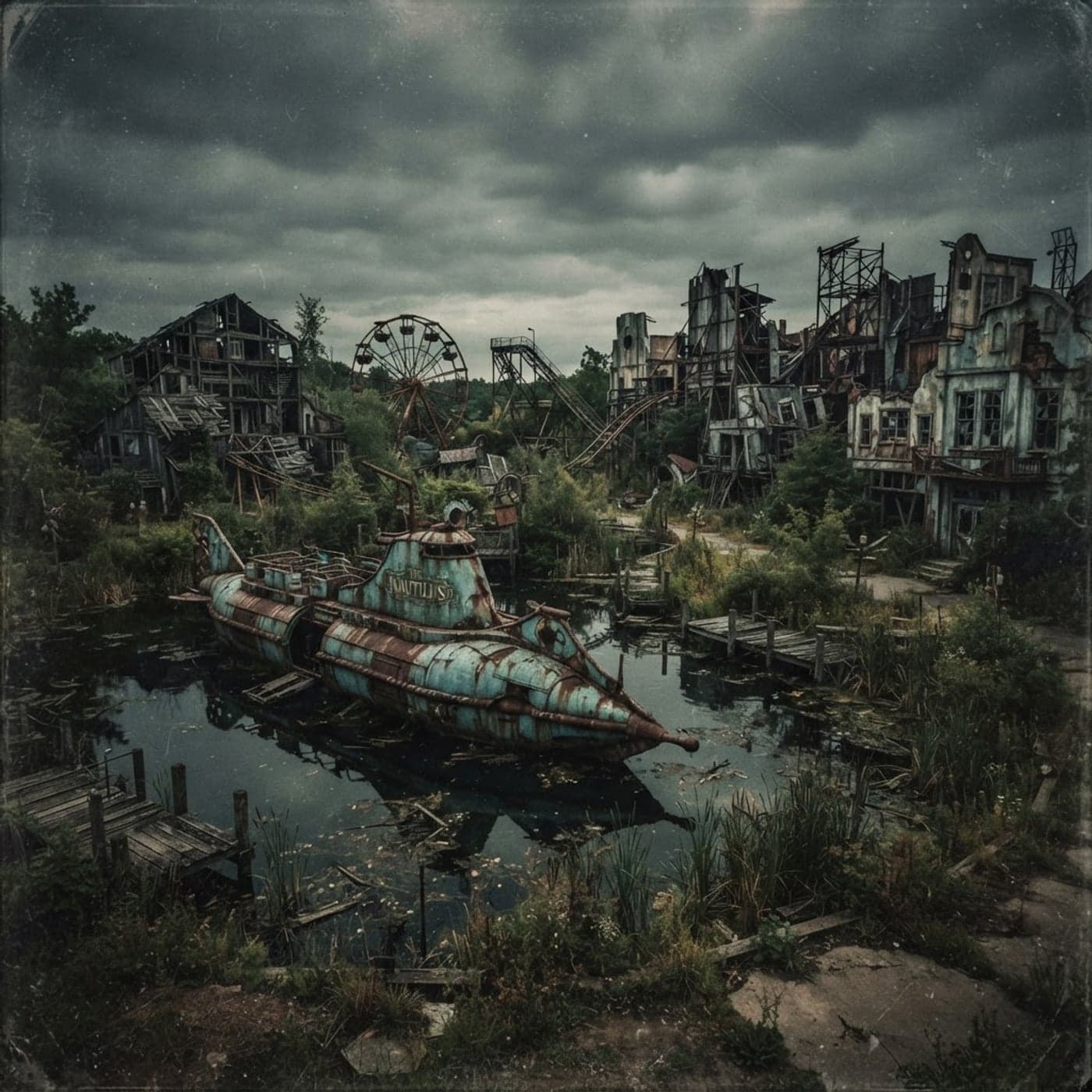
Before it was a theme park, the land held the silent sets of a soap opera, a ghost town waiting for its second act.
From the Cidade da Criança Wikipedia page. The hosts are synthetic voices.
Read the script
Before it was a place of laughter and rides, the land where Cidade da Criança now stands was a silent set. A ghost town, built for a soap opera called 'Redenção'. It was a city of facades, a film set waiting for its second act. This was the beginning, in the 1950s, for what would eventually become Brazil's first theme park. Cidade da Criança, the Children's City, opened its gates in 1968. It was a grand vision, born from a desire for cinematic splendor, transforming the old soap opera sets into a realm of childhood wonder. It was ambitious, mirroring Brazil's own journey through post-war growth and dreams of modernity. The park was designed with themed areas, capturing the imagination. There was a replica of the Amazon Theatre, a nod to the country's vast natural heritage. There was the Madeira-Mamoré Railroad, a piece of history. And a submarine ride, a marvel of engineering for its time, filled with over two million liters of water. It was the first of its kind in the Southern Hemisphere. The park thrived through the 1970s and 80s. It was a place of bustling activity, a symbol of entertainment and burgeoning dreams in a developing nation. Children marveled at the 'Crazy House,' and rode the 'Minhocão' roller coaster. It represented a golden age, a time of expansion and popularity. But time, as it does, brought change. By the late 20th century, the park began to face challenges. New competitors emerged, like Playcenter and Hopi Hari, drawing crowds away. Maintenance became an issue. In 2005, the city hall closed Cidade da Criança, citing a lack of security and upkeep. The plan then was to repurpose the space, to turn it into an educational site. That transformation, however, proved difficult. The project faced setbacks, with the state court rejecting proposed funding, noting the space wasn't built with a pedagogical design. The city then turned to a concession bid, seeking private operation and maintenance. In 2010, there was a reopening. It was a moment of renewed hope, but it was met with criticism. After five years of closure, visitors expected something new, something grand. Instead, they found a park with many attractions still closed, including the cable car and the submarine. Only a handful of rides were operational on opening day. The simulator broke down on the inauguration itself. Despite the initial disappointment, efforts were made to add new attractions. A mini roller coaster, a carousel, bumper cars, a Ferris wheel – the park tried to recapture its former magic. A unique feature emerged, a 'Mirim Town Hall,' where elected child mayors could participate in the park's governance, offering suggestions and attending meetings. It was an attempt to weave governance and play into the fabric of the city. The park continued to operate, a place where the echoes of old films and the laughter of children sometimes mingled. But shadows lingered. In 2019, a tragic incident occurred on the children's roller coaster, resulting in a fatality. Investigations followed, focusing on safety reports and emergency structures. Then, the COVID-19 pandemic brought further closure in 2020. Like so many places, it had to shut its doors, waiting for a safer time. Cidade da Criança remains, a place with a complex history. A testament to ambition, nostalgia, and the enduring hope for a brighter future, a city built for children, still navigating its own path. This is based on the Wikipedia article titled Cidade da Criança, available under Creative Commons. The hosts are synthetic voices.