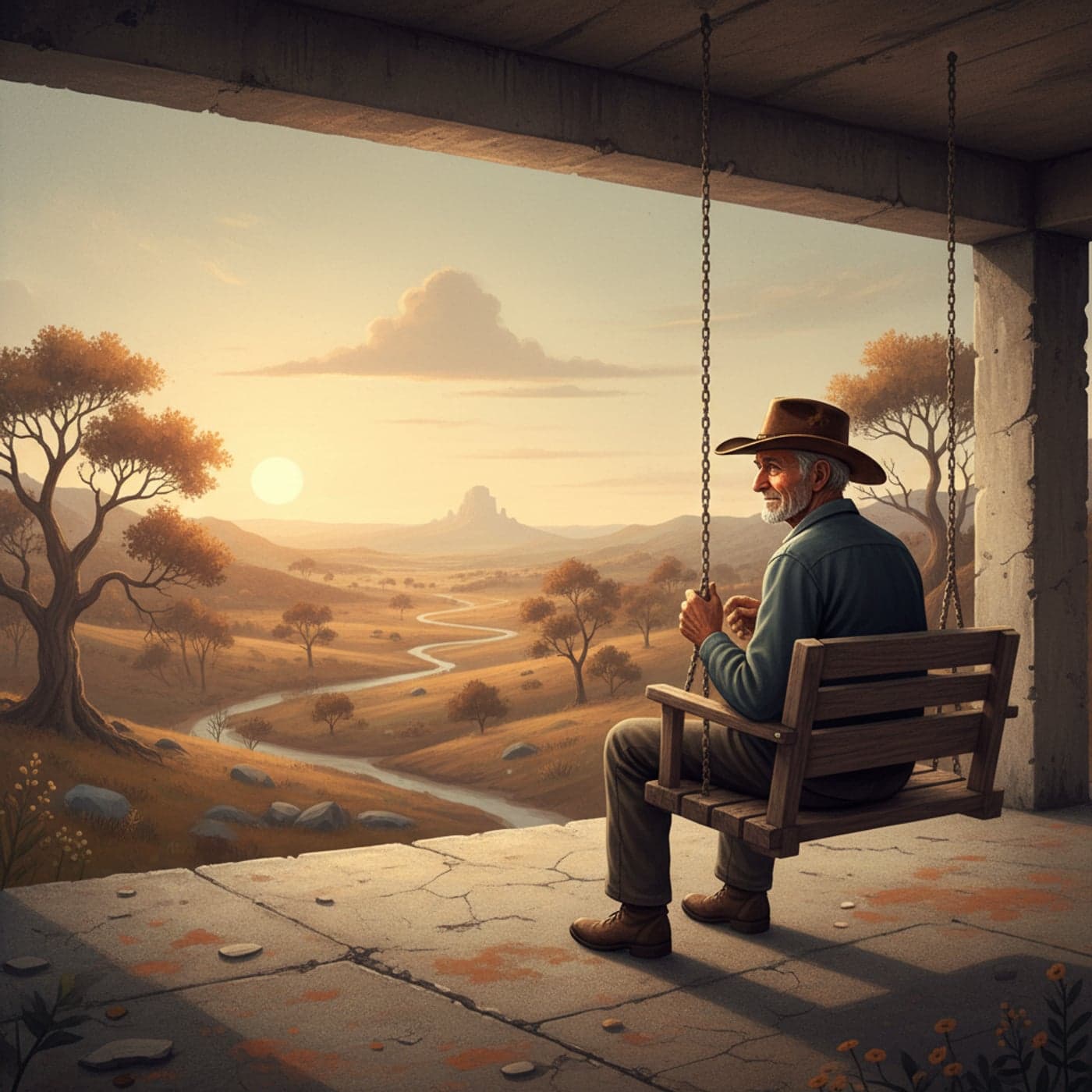
He rode into Hollywood as a stuntman and, decades later, rode into Oscar contention as a leading man, his weathered face a map of a life lived under open skies.
From the Richard Farnsworth Wikipedia page. The hosts are synthetic voices.
Read the script
He rode into Hollywood as a stuntman, a man comfortable in the saddle, his face already etched with the stories of open skies. Decades later, he rode into Oscar contention, his weathered visage now a roadmap of a life lived under the vast American expanse. This is the story of Richard Farnsworth. Born in Fairfield, Washington, in 1920, Farnsworth's early life hinted at the resilience that would define his career. His mother was a homemaker, his father an engineer. But it was the call of the sky that first took hold. After high school, he enlisted in the United States Air Force during World War II. He served as a pilot, a First Lieutenant in the 344th Bombardment Group, earning the Silver Star for his gallantry and bravery in combat. A life of service, a life of quiet courage. But the pull of the West, and perhaps the silver screen, was strong. Farnsworth gradually moved into acting, finding his niche in the world of Westerns. Hollywood, it seems, was ready for his authentic presence. He made uncredited appearances in some of the era's classics: *Gone with the Wind*, *Red River*, *The Wild One*, and *The Ten Commandments*. For years, he was a fixture in the background, a skilled horseman, a reliable presence, often earning his keep as a stuntman. His first credited film role wouldn't arrive until 1963. For a long time, he was the man behind the scenes, the skilled hand that made the magic happen. His career was a long, slow ride. Decades passed before his talents were fully recognized. The breakthrough, when it came, was significant. In 1982, he starred as the aging stagecoach robber Bill Miner in the Canadian film *The Grey Fox*. This role, in his early sixties, earned him critical acclaim and a Golden Globe nomination. He was finally stepping into the spotlight, embodying the stoic, resilient spirit of the American West that he knew so well. From then on, Farnsworth became known for his portrayals of wise, often quiet, characters, frequently in Western settings. He played a father figure to Anne in *Anne of Green Gables*, a sage cowboy with horse training wisdom in *Sylvester*, and even a baseball coach in *The Natural*. He held his own alongside seasoned actors, his authentic presence a grounding force. His career reached a remarkable peak in his later years, a testament to a life lived with quiet perseverance. In 1978, he received his first Academy Award nomination, for Best Supporting Actor in *Comes a Horseman*. But the true astonishment came in 1999, when, in his late seventies, he was nominated for Best Actor for his role as Alvin Straight in David Lynch's *The Straight Story*. He played a man who journeys across America on a lawnmower to visit his ailing brother. It was a performance of profound humanity, a quiet masterpiece that resonated deeply. At over 79, he became one of the oldest nominees for the Best Actor Oscar, a remarkable achievement for a man who had spent so many years in the periphery. Farnsworth was married and had two children. After becoming a widower, he lived on a ranch in New Mexico. But his professional triumphs were shadowed by personal hardship. In October 2000, suffering from terminal cancer that left him in great pain and partially paralyzed, Richard Farnsworth died from a self-inflicted gunshot wound at his ranch. His legacy is one of authentic performances, of a man who embodied the spirit of the frontier with a quiet dignity. He rode into Hollywood as a stuntman and, decades later, rode into the hearts of audiences and critics alike, a true legend of the Western screen. This portrait is based on the Wikipedia article titled Richard Farnsworth, available under Creative Commons. The hosts are synthetic voices.