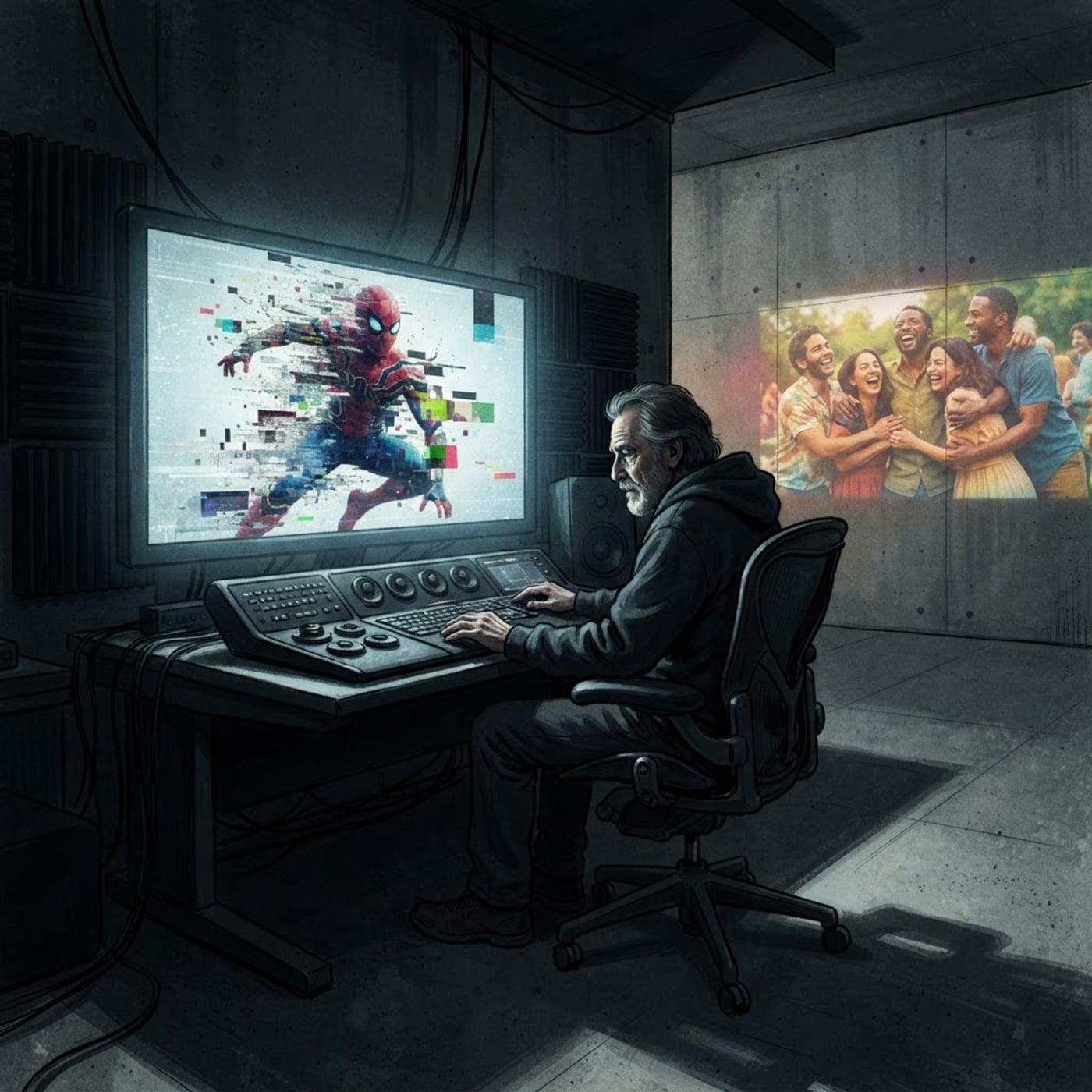
Before directing a blockbuster superhero movie that bombed, Josh Trank was a record-breaking young director whose debut film earned an astounding 85% on Rotten Tomatoes.
From the Josh Trank Wikipedia page. The hosts are synthetic voices.
Read the script
We often assume that a director’s path in Hollywood is a steady climb. You start small, make a name for yourself, and then, if you’re good enough, you get the keys to a blockbuster. It’s a progression, a natural upward trajectory. But what if the very first rung of that ladder puts you at the absolute top? What if your debut film breaks records, only for your next, much larger project, to spectacularly crash and burn? The career of Josh Trank is a fascinating and often turbulent counter-narrative to that conventional wisdom. Before he was known for a superhero movie that famously failed, Josh Trank was, for a brief, shining moment, a wunderkind. His first feature film, a found-footage sci-fi thriller called *Chronicle*, didn’t just make a splash; it made history. Released in 2012, when Trank was just 27 years old, the film earned an astounding 85% on Rotten Tomatoes and grossed over $125 million worldwide on a paltry $12 million budget. More remarkably, it made him the youngest director ever to open a film at number one at the US box office. This wasn't just a successful debut; it was an unprecedented triumph, placing him in a league with directors like Steven Spielberg and James Cameron, but at an even younger age. Following this meteoric rise, Trank found himself in an enviable position. Hollywood came calling, offering him a slew of high-profile projects. He was linked to a *Spider-Man* spin-off, *Venom*, a film adaptation of the video game *Shadow of the Colossus*, and a Warner Bros. project called *The Red Star*. But Trank, perhaps emboldened by his success and his desire for originality, turned them down. He even pitched an R-rated *Venom* film, in the vein of *The Mask*, which he co-wrote with his mentor, Robert D. Siegel, only to walk away when the studio didn't bite. He wasn't interested in just taking any job; he was looking for something that resonated with his own vision. That vision, however, took a sharp turn with his next project: the 2015 reboot of *Fantastic Four*. This was a major studio tentpole, a superhero film with high expectations, and it became, by all accounts, a disaster. Critically panned, it garnered a dismal 9% on Rotten Tomatoes. The box office numbers were equally grim. The film's troubled production became a public spectacle, with Trank posting and quickly deleting a tweet just before the film's release, seemingly blaming the studio for imposing changes that ruined his original cut. Actor Toby Kebbell, who worked on the film, publicly supported Trank's claim, adding fuel to the fire. Though Trank later clarified that a director's cut was improbable due to scenes he was simply unable to film, the controversy had already taken hold. The fallout from *Fantastic Four* was immediate and severe. Trank had been slated to direct a standalone *Star Wars* film about Boba Fett, a dream project for many filmmakers. But less than a year after the announcement, he left the project. While Trank himself stated it was a personal decision, driven by a desire to pursue something smaller and more original in the face of intense online scrutiny, numerous reports suggested he was dismissed due to production issues on *Fantastic Four* and a perceived lack of communication with producers. The director who had been Hollywood's hottest young talent just a few years prior was now a cautionary tale. After this very public implosion, Trank essentially disappeared from the major studio scene for five years. It was a hiatus that suggested a period of reflection and recalibration. He re-emerged in 2020 with *Capone*, a more intimate biopic starring Tom Hardy. It was a smaller, more personal project, released through video on demand, and it received mixed reviews. It wasn't another blockbuster, but it was a return, a quiet pursuit of storytelling on his own terms. Since then, he's announced a television series about the CIA, also starring Tom Hardy, and a horror-thriller film, indicating a steady, if less flashy, return to filmmaking. Throughout his turbulent career, Trank has spoken about his interest in what he calls a “deconstruction approach” in his movies – the deconstruction of myth, of iconic figures, of mythic ideas. It’s a theme that resonates deeply with his own journey: the deconstruction of a wunderkind director, the deconstruction of a superhero franchise, and perhaps, the ongoing deconstruction and rebuilding of his own path in Hollywood. From record-breaking success to public failure and a quiet resurgence, Josh Trank's story serves as a potent reminder that in the volatile world of filmmaking, the only predictable thing is its unpredictability. This is based on the Wikipedia article titled “Josh Trank,” available under Creative Commons. The hosts are synthetic voices.